Social Lab- acclerate your prototype

Be the change you want to see out there in education and community. Where do we start? we start from where we are, exactly from there. ” The Finnish and Scandinavian education success is taking a success practice and making it available to absolutely everyone.” (Otto Scharmer, MIT). Approaching “Job shadowing” concept to grow your own action with the support of a team prototype.

Support‑education and special‑education structures need a whole new repertory of methodology, language, and behaviors to help young people and students make sense and acquire the inner ways for learning to happen. Developing social‑support education prototypes and team support would allow students to access knowledge that engages them as lifelong learners: building an image of themselves as the ones learning.

The Finnish education vision is of citizens able “to make democratic decisions with respect to humans (we add) and more‑than‑human rights.” In a world of multiple disruptions and exponential technologies, we support teams in acquiring—not only horizontal and vertical skills—the development of the self (IDGs).

This is the context for the program Social Lab—accelerate your prototype social service, educators.

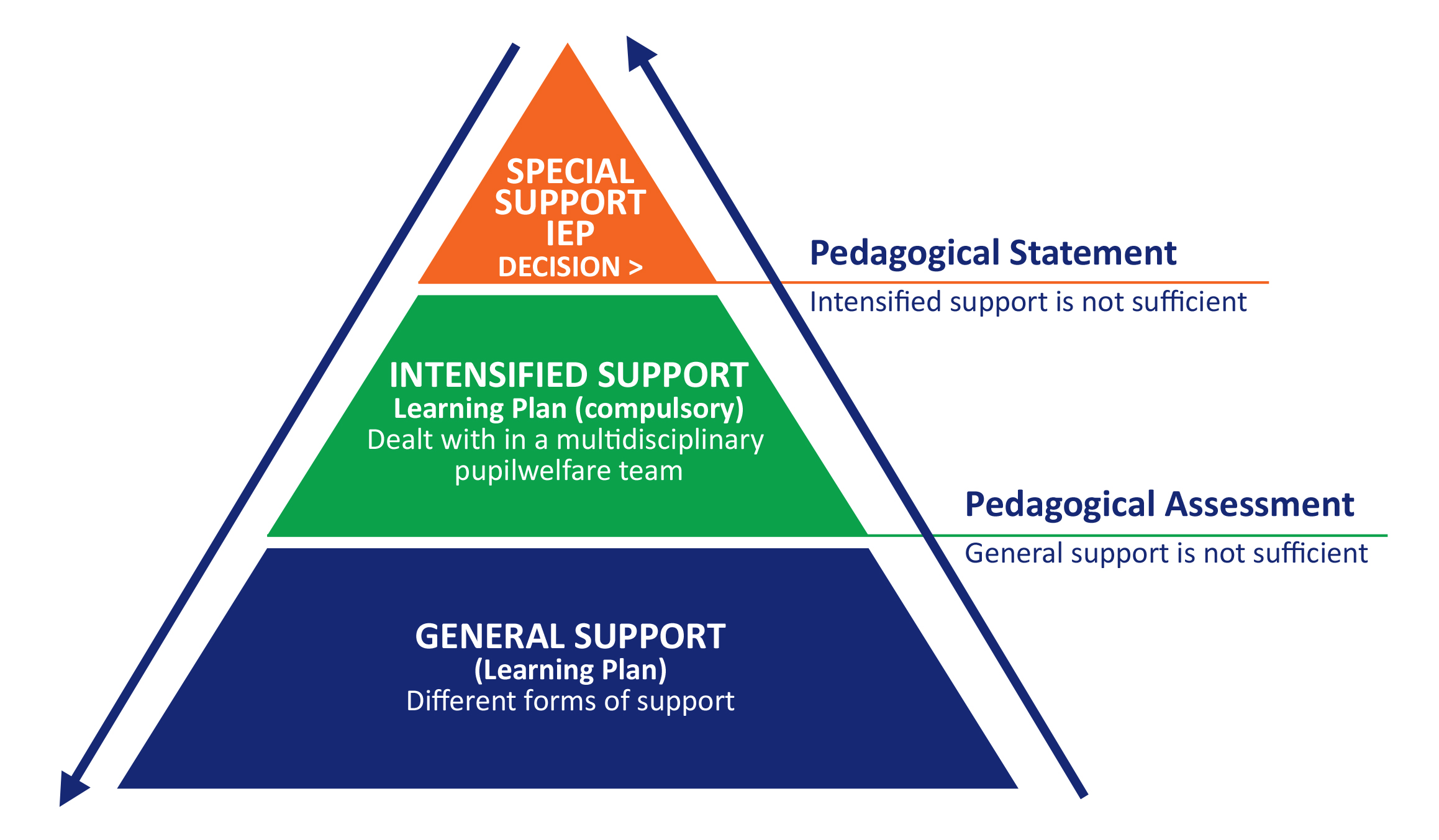
Finnish system data show that at least once during our school years we all needed some kind of support.

Systems of support and specialist provision | European Agency for Special Needs and Inclusive Education

(Source: Finnish National Agency for education & catch it early, trauma informed education Dr. Bruce Perry)

Feedback from Social Field and imagining Prototypes in action and in teams

source of the picture: Kelvy Bird, https://kelvybird.com/systems-scribing/ 

The program is Experience Based Learning, Putting Learning Relation in the middle of your project idea (prototype).  We cultivate the smallest possible action, that feels almost “effortless” (O’Brien, 2021).

What can you get at the end of the program?

This is a comprehensive hybrid program for social workers and educational experts. Expect to immerse yourself in the Finnish education context to grow your own prototype within your cultural and educational reality, experience a systemic‑approach accelerator methodology to develop a small action, and cultivate attention tools for noticing impact back home in each respective setting. Learning and listening to nature: the program will be hosted in the Helsinki area, with walks in nearby forests and empathy‑nature activities, as well as exploration of new social spaces. You are also expected to “create” your own support‑education idea.

Support‑process guidelines and module materials will cover concepts, practices, and cases. Leadership and team support will enable decision‑making capital in unpredictable times and volatile contexts (wicked problems in 21st‑century education). Mapping an ecosystem (to include students, teachers, and parents) of change‑making.

Knowing, doing, integrating:

1. Finnish approach to support education system and OMC (Open Method of Coordination) principles

2. Three‑tier intervention models for support and special education

Kolb’s Action Research / Experiential Learning

Scharmer’s Theory U and Systems Mapping

Social work in educational settings

Multi‑professional collaboration in schools, and the unique role of libraries and other local municipal actors

“See/catch the good” (positive action & thinking) — Lotta Uusitalo

We focus on interactive (affective) education methods—”pedagogies of togetherness”—to facilitate cohorts in developing the practical skills and strategic thinking required to see and face 21st-century wicked problems in educational settings and bridge them to outer reality. Working together in small groups, participants embrace the learning principles of Open Mind, Open Heart, and Open Will (Otto Scharmer).

Program & Curriculum

Transforming learning and schooling as we know to allow actions shaped by the future (thinking) rather than the patterns of the past.

Module 1

Turning challanges into “small cracks” as opportunity for change

Module 2

Awareness, unlearning building vision around challenge

Module 3

Compassion and cultivating learning relation

Module 4

Prototyping & accelerator, building up a community of learning

(co-learning& co-creating)Prototyping & accelerator, building up a community of learning (co-learning& co-creating)

Place based learning

The Helsinki metropolitan area is a place where one can notice resilience, re‑birth out of the most difficult conditions; challenges and peace co‑exist via innovation and permanent movement, including learning from mistakes. There is both a sense of urgency and there is plenty of time. Some prototypes fail and some crystallize (develop and become something new altogether), and all are learning opportunities. The city that feels “like a village” offers the ergonomics (physical, communication, and cognitive) for the Social Lab and groups prototyping.

Accommodation, transportation, and food costs will be paid by each participant separately; we will provide a practical guide upon registration.

Program offered in partnering with Dialognetz – Institut für vielfältige Weiterbildung / Punktgenau – Forum für politische Bildung.

Learning process

This program is a sustainable learning path—how we approach “difficult moments” and create the opportunity for learning that matters. Instead of not noticing the everyday small resisting actions that lands us further way from what we think should be happening in our work and around us, we face the challenge and create a container that will allow us safely and trustfully to see the challenges from new perspectives.

We will practice our capabilities to accelerate learning while “slowing down”(Hayashi, 2021), and cultivate unconditional confidence (doing the work) indifferent to external conditions.

We will also create and learn to develop containers (community) that will support us, like a nurturing place in which we continue to go as we continue our work and being once back into our environment. The experience itself grows with you, it cross‑pollinates, it is not a simple one‑time event.


  • Practice reflection based on the materials provided before each LIVE session; you will have supporting journaling questions to guide you.

  • Ask questions anytime; facilitators and guests will answer in Q&A recorded sessions.

  • Peer practice for focused work, getting feedback and insights for your prototyping.

  • Participate onsite in Helsinki for accelerated learning, creating a network to allow future scenarios to be shaped.

  • Self‑reflection after each module for your self‑competencies process.

Team

Andreea Gatman – Education Leadership, ICF Team Certified Coach, U Lab from MIT practitioner, 10 years trainer in Helsinki for programs on New Learning Ways & Spaces- What next in Finnish Classroom?, School Development, Best Practices Benchmarking in Finland and Estonia, Coaching Strategies. MBA in PGM Modul Vienna, Humphrey Fellowship “Thriving Communities” 23/24 at Vanderbilt University Peabody College, Leadership&Organisation Education Policy.

Simone Köhler – Certified social worker, holds studying ethics and organisation at University of Witten/Herdecke Germany, Five Steps® (systemic) Coach, Healthcare Practitioner DGAM, U Lab from MIT practitioner, since 1994 she has worked in various contexts within the fields of education and civil society as a social worker, coach and education consultant. Simones area of expertise include the transition from school to work, training and professional development for social workers and managers, team coaching in the education sector as well as in private-sector companies and the social service sector. Simone is passinate about democracy and personal integrity.


Christina da Silva – Faculty Guest (TBA)

Professor da Silva’s research centers at the learning ecologies of linguistically/culturally diverse students; partnerships between family, community, school, and university that support linguistically diverse learners and emphasize educational opportunity and equity. She has taught in public schools in Brazil and the United States and has worked with researchers in Chile, Brazil, and Mexico on implementing ecological models of community development. Affiliate professor University of South Denmark and University of Oslo.

Faculty guest Lauri Jäntti Ph.D. researcher in geography and project-based learning, MA in Cultural Studies, previous extensive experience special education class

Social Lab- acclerate your prototype

Would you like to join us?

Clear
Scroll to Top